
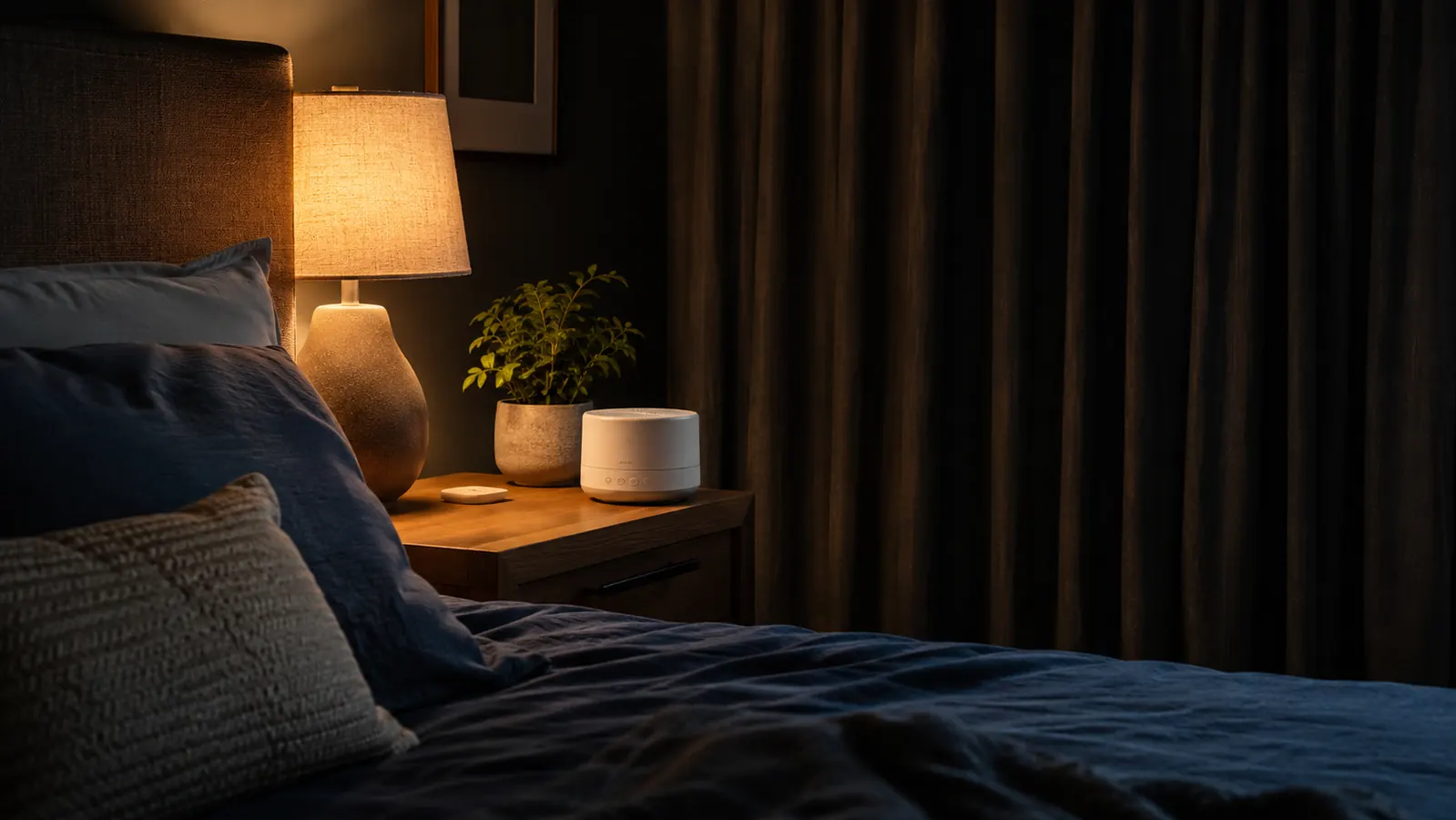
For most of my fifties I kept blaming my mattress, my pillow, my stress levels. I cycled through all of them. What I never seriously addressed was the noise. The 5:47 a.m. garbage truck. My husband's breathing that somehow turned into a chain saw around 2 a.m. The neighbor's dog that treats Saturday mornings as a personal announcement. Once I finally treated noise as the actual problem, instead of a fact of life, my sleep changed fast. This guide is what I wish someone had handed me three years ago.
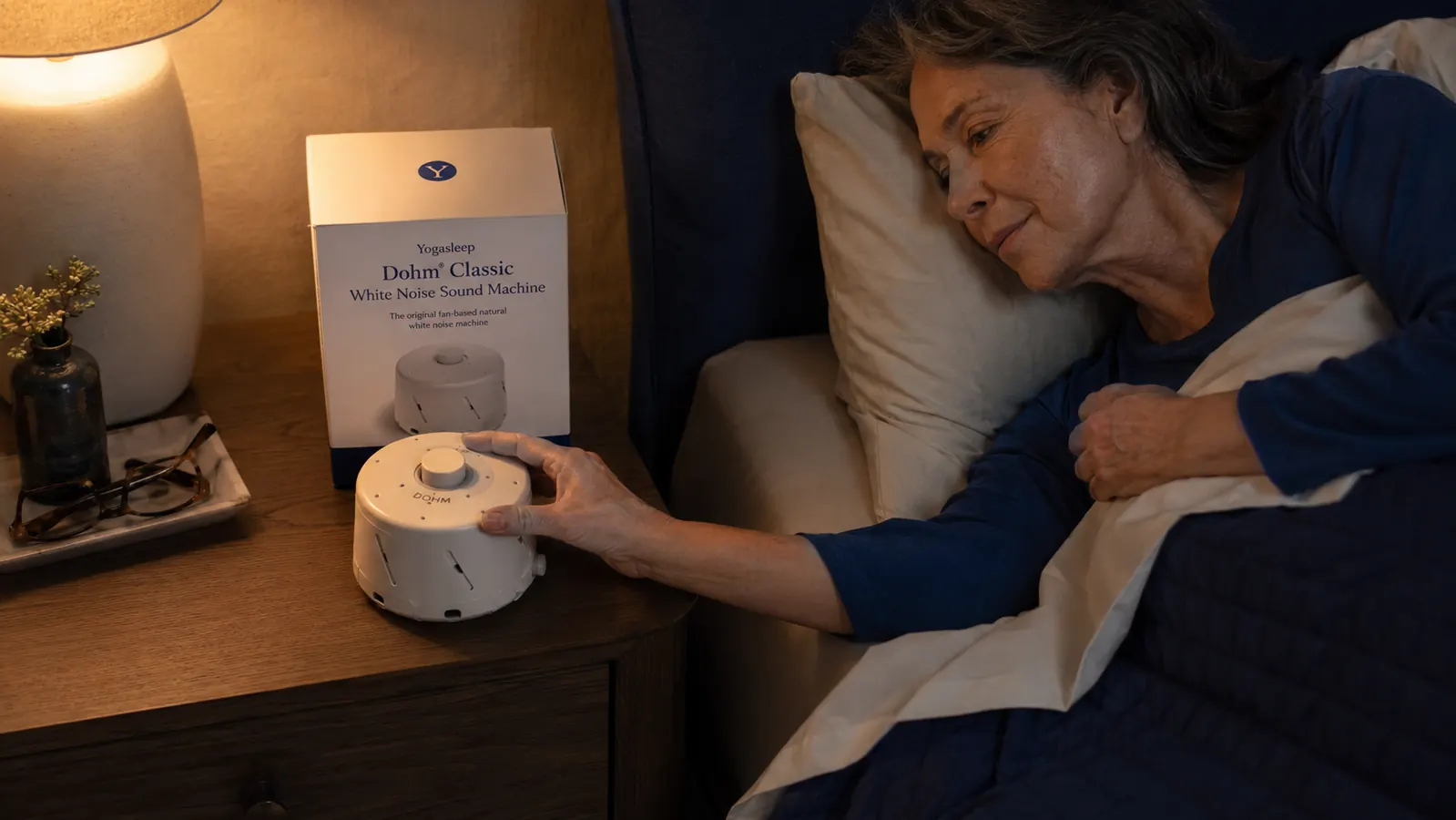
I am not going to tell you to wear earplugs every night and call it done. Some people sleep fine with earplugs; I find them uncomfortable and they make my ears ring by morning. There is a layered approach here, five steps in order of impact, and the anchor of the whole system is a white noise machine. Specifically, the Yogasleep Dohm Classic, which I have had on my nightstand for going on 14 months now. We'll get to exactly why in Step 2.
If your bedroom noise problem is keeping you in lighter sleep stages all night, this is the machine that fixed it for me.
The Yogasleep Dohm Classic uses a real fan motor to produce natural, non-looping white noise. Over 40,000 Amazon reviewers agree it works. It takes about three nights to adjust and then you wonder how you ever slept without it.
Amazon Check Today's Price on Amazon →Step 1: Find Out Where the Noise Is Actually Coming From
Before you buy anything or rearrange your bedroom, spend two nights paying attention. Not obsessing, just noticing. Is the noise coming through the window? Under the door? Through the shared wall with the hallway or an adjoining room? Most people assume their windows are the main culprit because that is where outside sounds come from. But in my house, the real leak was the gap under the bedroom door. The hallway light coming on, my husband's late-night TV, the dog's collar tags jangling when he got up for water, all of that poured right under a half-inch gap.
A simple way to locate leaks: sit quietly in your bedroom with the lights off and the door closed. Notice where sounds feel loudest. Run your hand along the door frame and the base of the door. Feel for drafts. If you have thin single-pane windows, you may feel air movement there too. Once you know your main entry points, the fixes in the following steps become much more targeted.
Common noise sources ranked by how often I hear about them from readers: snoring partner or housemate (number one by a wide margin), outside traffic and street noise, early-morning deliveries or garbage collection, upstairs neighbors, and HVAC systems with loud cycling. Each has a slightly different fix, but Step 2 addresses nearly all of them at once.
Step 2: Add a White Noise Machine as Your Sound Foundation
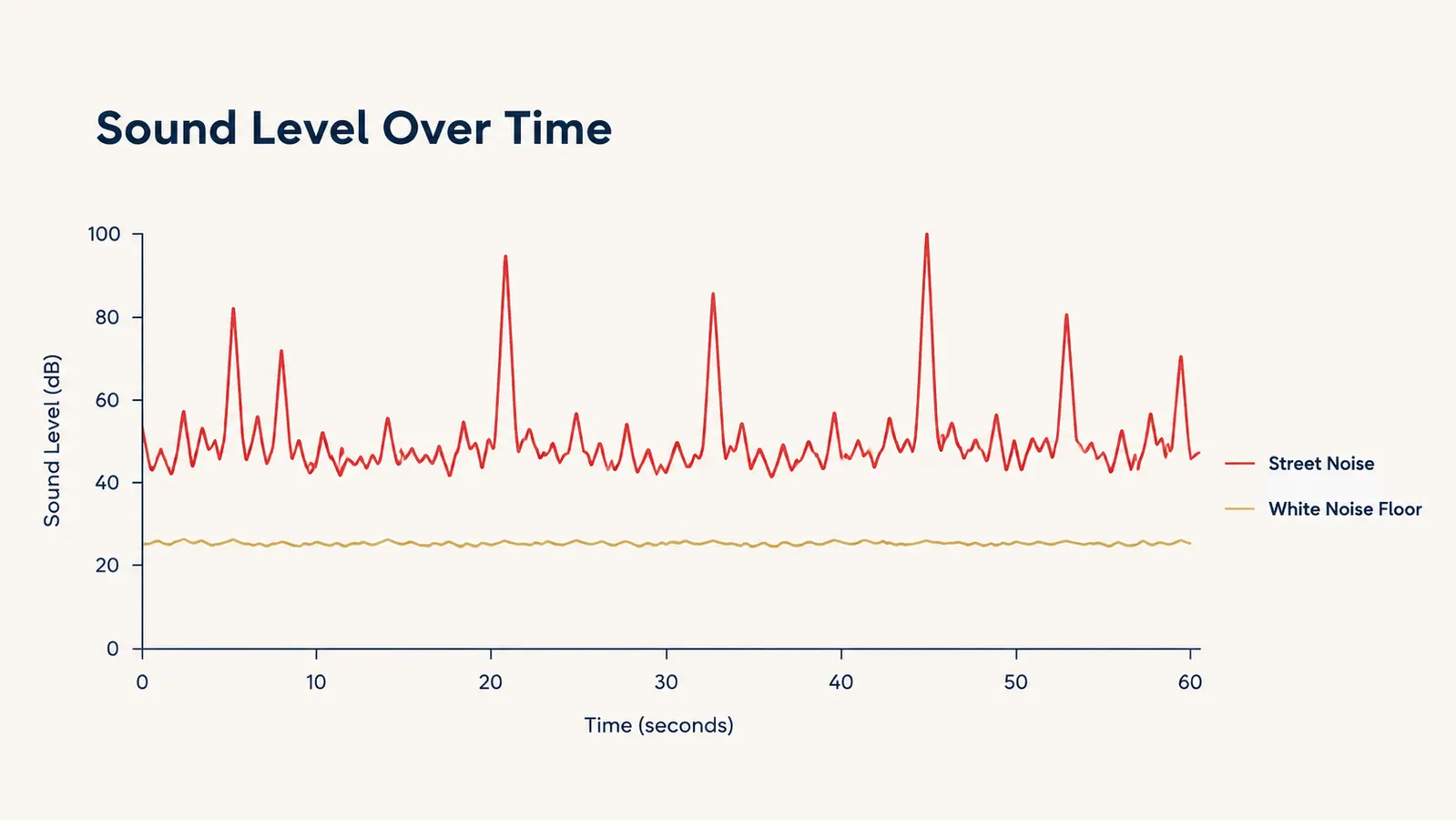
This is the single highest-leverage change you can make, and I want to explain why it works before I tell you which one to buy. White noise does not block sound the way earplugs do. Instead, it raises your bedroom's ambient sound floor. When the floor is sitting at a constant, non-intrusive level, sudden noises have to be significantly louder before they create the contrast that wakes a sleeping brain. A garbage truck at 65 decibels waking you when your room is at 25 decibels of ambient sound is a 40-decibel jump. That same truck, when your room is already at 45 decibels of steady white noise, only represents a 20-decibel jump. Your brain is much less likely to jolt awake.
The Yogasleep Dohm Classic is the machine I recommend because it uses a real, physical fan motor to generate its sound rather than a digital recording on loop. That distinction matters more than it sounds. Digital white noise machines, even expensive ones, play a recorded audio file that loops every few seconds or minutes. If you are a light sleeper, your brain sometimes catches that loop point and it is enough to pull you toward wakefulness. The Dohm produces true, non-repeating sound because the fan is actually spinning. It is warm, rounded, and consistent, the kind of sound your nervous system simply stops tracking after a few nights.
Setup is simple: place it on your nightstand or on the floor near the door if your main leak is the hallway. The Dohm has two speed settings and a rotating outer shell you twist to adjust the tone from lower and fuller to slightly higher and airier. I run mine on the higher speed with the shell turned about two-thirds open. It took me until night three before I stopped noticing it, and by night five I was sleeping through things that used to wake me three and four times a night.
Step 3: Seal the Door Gap (Fifteen Minutes, Budget-Friendly)
A standard interior door with a half-inch gap at the bottom is acoustically about as solid as a cloth curtain. Sound travels through air, and a gap that size lets a remarkable amount of it through. A door sweep, which is a rubber or brush strip you screw to the bottom of the door, closes that gap for good. Most hardware stores carry them affordably. You do not need a contractor. A Phillips screwdriver and ten minutes is all it takes. If your door is rented or you cannot modify it, a draft stopper, basically a fabric tube you place against the base of the door, gives you 70 percent of the same benefit for a modest cost and leaves no holes.
While you are at it, check the door frame on the sides and top. Many interior door frames have visible light gaps when the door is closed. That means sound gaps too. Self-adhesive foam weatherstripping tape fills those in five minutes and costs about $7 for a full roll. None of this is glamorous, but the combination of a door sweep and foam weatherstripping plus a white noise machine is genuinely close to what a soundproofed studio produces in terms of day-to-day practical noise isolation.
Step 4: Treat the Windows Without Buying Expensive Blackout Curtains
Windows are the thinnest part of most exterior walls and they transmit both sound and light. For sound specifically, the issue is usually window rattles from traffic vibration and thin glass that does not attenuate low frequencies well. Heavy curtains, the kind with a dense woven liner, do help somewhat with sound. They add mass and air pockets between the outside world and your room. But the impact is modest compared to the door fixes above, so treat this as a supplemental layer rather than a primary fix.
If your window rattles in its frame when a truck goes by, press some weatherstripping foam along the inside edges of the window sash. That stops the rattle and tightens the seal. If you live on a busy street with nighttime traffic noise as your primary problem, consider a second set of curtains in addition to whatever you have now. Two layers of fabric separated by an air gap insulate better than one thick layer. Neither of these fixes requires a contractor or a large budget.
For light coming through the windows that is disturbing your sleep in addition to noise, a blackout liner that attaches inside your existing curtain rod addresses both problems at once. You do not necessarily need to replace your curtains. A clip-on blackout panel behind existing curtains is budget-friendly and can be removed easily for renters.
The white noise machine handles what you cannot seal out. Treat it as your insurance policy for every sound you missed.
Step 5: Manage Partner Noise and In-Room Sound Sources
If the noise source is your partner, either snoring or simply a different sleep schedule, this is where a lot of readers feel stuck. You cannot soundproof away a person sleeping three feet from you. What you can do is layer the white noise machine with good positioning. The Dohm is most effective when it sits between you and the snoring source, either on the nightstand nearest you or on a small shelf on your side of the bed. The sound fills the space between your ears and the noise, which reduces the contrast even when the snoring itself does not change.
For partners who keep different schedules, have the later sleeper use a reading light with a very narrow beam rather than a lamp that fills the room, and put the white noise machine on a timer if they are coming to bed after you are already asleep. The Dohm has no built-in timer, but a standard lamp timer you plug it into at any hardware store handles this. I set mine to come on at 9:30 p.m. and stay on until 6:30 a.m. regardless of when I actually get into bed.
Also check your own room for noise sources you have stopped noticing. A loud ceiling fan that wobbles. A clock with an audible tick. A humidifier that cycles on and off with a click. Light sleepers often habituate to these sounds during waking hours but the brain registers them during lighter sleep stages. Replacing a ticking clock with a silent quartz movement and tightening loose ceiling fan blades are five-minute fixes that quietly pay off every night.
What Else Helps
The five steps above are the core of the system and they address the vast majority of bedroom noise problems for most people. A few additional things are worth knowing. First, your sleep depth matters as much as the noise level. If you are sleeping in lighter stages because of age, hormones, stress, or poor sleep habits, any noise will wake you more easily. The noise-blocking work in this guide buys you margin, but improving sleep depth itself through consistent bedtimes, keeping the room cool (around 65 to 67 degrees Fahrenheit works for most adults), and limiting alcohol in the evenings will make the noise-blocking steps work noticeably better.
Second, earplugs are a legitimate tool for specific situations, travel, hotel rooms, a one-time loud night, but I would not rely on them as the primary nightly solution. Foam earplugs can cause ear canal irritation over months of nightly use, and many people find them so uncomfortable they pull them out in their sleep without realizing it. The white noise machine is a set-and-forget solution that requires nothing of your body while you sleep.
Third, if snoring is the main issue and your partner has not been evaluated for sleep apnea, that conversation is worth having with their doctor. Sleep apnea is common, treatable, and the snoring is often the most visible symptom. A CPAP machine is not a comfortable idea for most people, but it is a real solution to a real health issue, and the side effect is a quieter bedroom for you.
Pulling It All Together
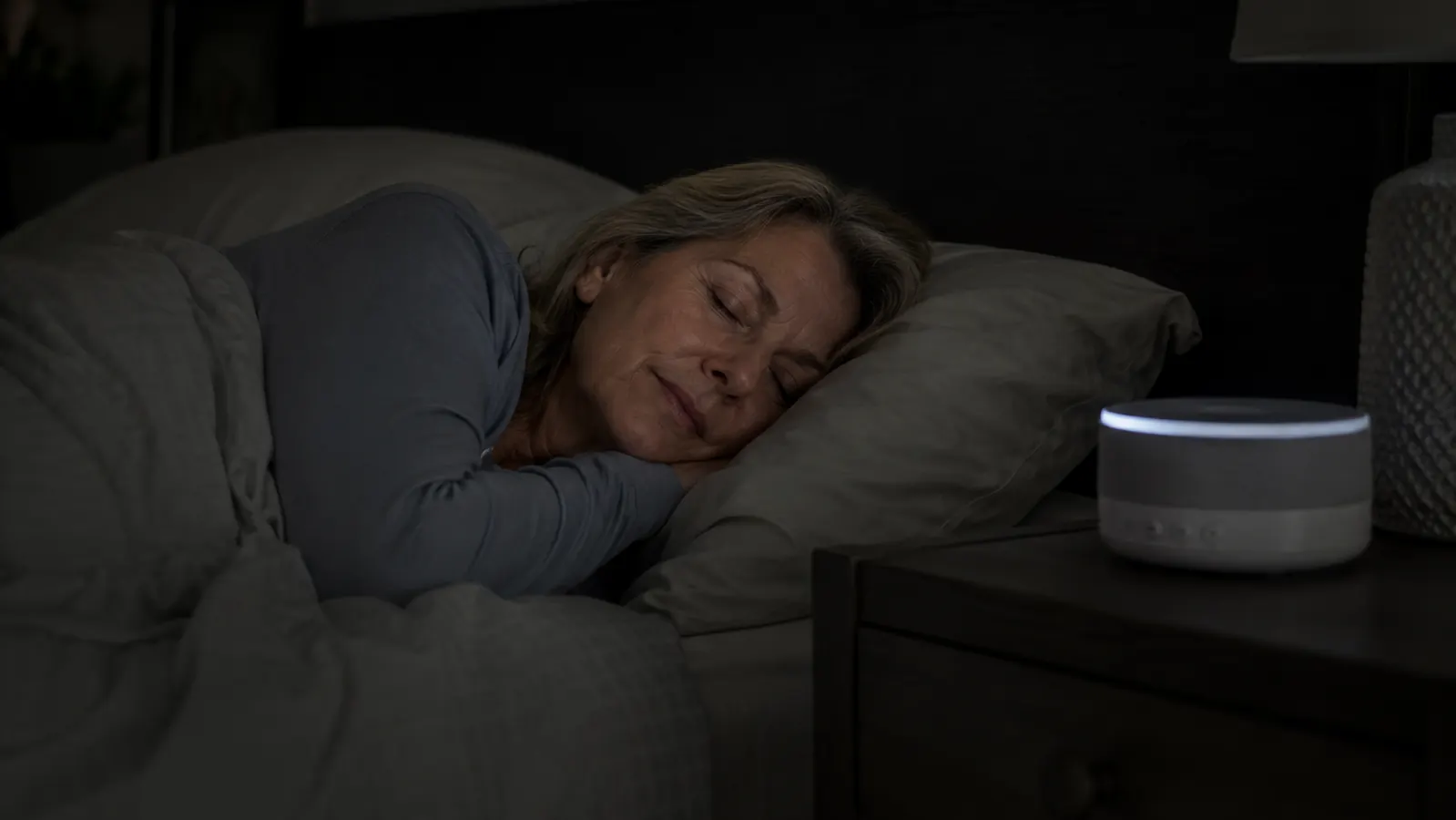
The order matters here. Start with the white noise machine because it is the highest-impact single step and it works the night you plug it in. Then seal the door gap, which is cheap and fast. Then treat the windows. Then manage in-room sources. Each step builds on the last. Most people who do all five find they are sleeping through things that used to wake them reliably, without medication, without expensive renovations, and without earplugs they will eventually stop wearing.
I am not someone who writes about things I have not tested personally, and I have lived with this exact combination in my own bedroom for over a year. The white noise machine is the one thing I would not want to go back to sleeping without. Everything else makes it work better. If you take one thing from this page, let it be that your brain wakes up to contrast, not volume, and a steady sound floor is the most effective way to shrink that contrast without changing anything else about your sleep environment.
The Yogasleep Dohm is the machine I used to build this system. It is the piece I would replace first if it ever stopped working.
Real fan motor, non-looping sound, two speed settings, adjustable tone. It has 4.6 stars across more than 40,000 reviews on Amazon. Check current pricing below.
Amazon Check Today's Price on Amazon →