
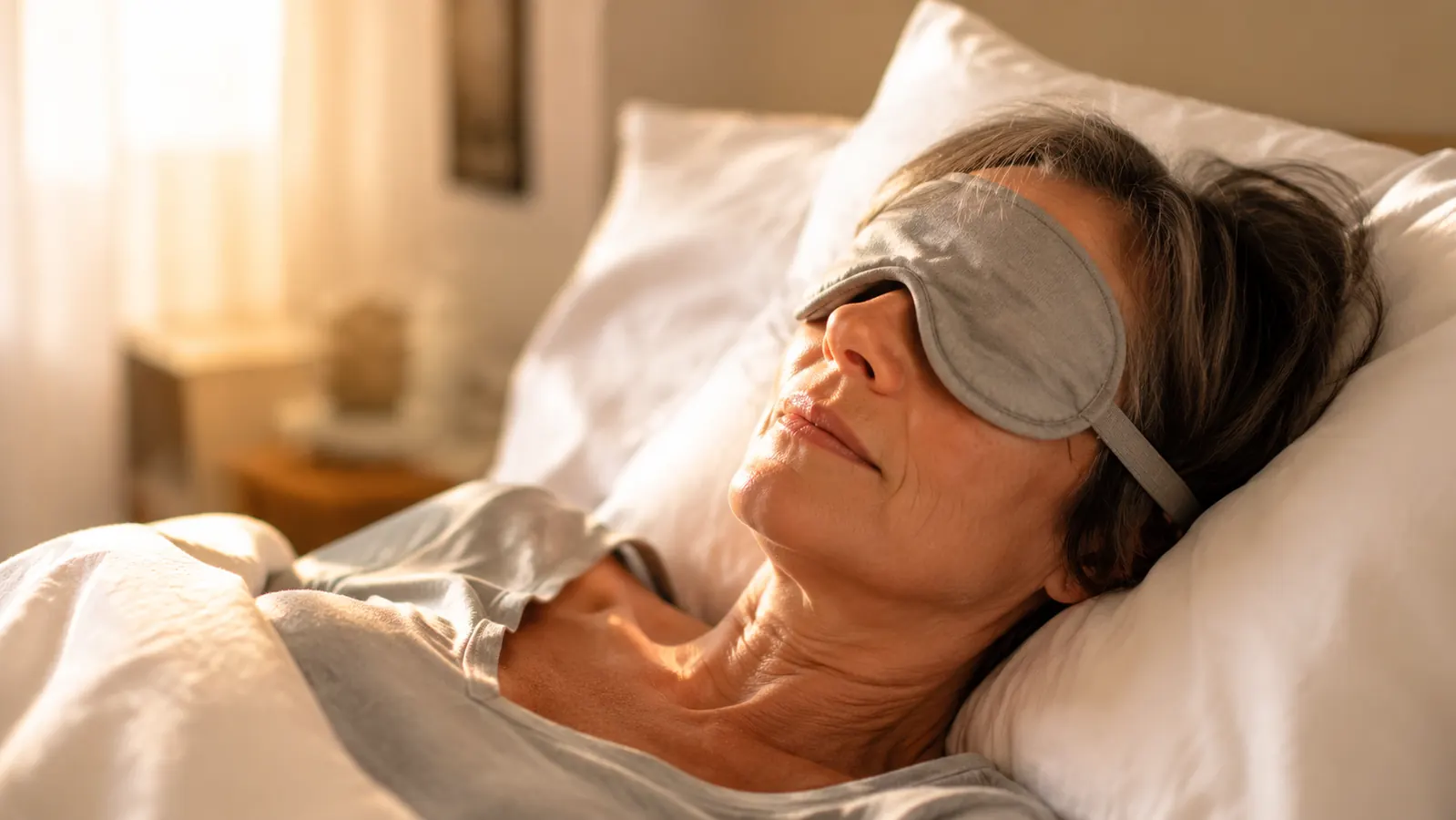
My neighbor Sandra texted me a picture of her nightstand last spring. On it was the Mavogel Cotton Sleep Mask, and her message said three words: 'Life changing, Carol.' I rolled my eyes a little. Sandra is enthusiastic about everything. But I looked the mask up and saw 94,303 reviews on Amazon with a 4.5-star average, and I thought, okay, that is too many people to all be wrong. So I ordered one. It cost me less than two lattes.
What I want to do in this piece is tell you the things nobody says in the five-star reviews. Not because the Mavogel mask is bad, but because the glowing reviews tend to be written by people who are just happy the thing is dark. There are a few details about fit, strap design, and who this actually works best for that the ratings do not surface. I have been using this mask for eleven weeks, so let me give you the full picture.
The Quick Verdict
The Mavogel delivers genuine total darkness at a price that makes trying it almost risk-free. The contoured nose bridge is what separates it from flat cotton masks, and for most people that is enough. A few strap quirks keep it from being perfect, but it earns its crowd of fans.
Amazon Check Today's Price →If light is waking you up early, this budget fix is worth trying before you spend more on a fancier option.
The Mavogel Cotton Sleep Mask has over 94,000 Amazon reviews for a reason. See today's price and check availability below.
Amazon Check Today's Price on Amazon →What Nobody Tells You in the Five-Star Reviews
The most common five-star review goes something like this: 'I can finally sleep! It is so dark!' And that is true. The Mavogel does block light well. But nobody mentions the strap. The Mavogel uses a metal slider clasp on its elastic band, the same style you see on luggage tags. It works. It does not slip. The problem is that if you are a side sleeper like me, that metal clasp sits at the back of your head, and if your pillow is firm, you will feel a small but real pressure point in the middle of the night.
It took me about a week to figure out the fix: I adjust the strap so the clasp rides higher on my skull, closer to the crown than the base. Once I did that, the pressure point disappeared completely. But I want you to know this upfront, because if you pull it out of the package, try it for two nights, feel the clasp digging in, and return it, you are leaving the solution on the table. Adjust the strap. The problem goes away.
The second thing the reviews gloss over is the nose bridge. This is actually the Mavogel's best feature, not just a nice-to-have. Most flat cotton sleep masks leak light at the nose gap because your nose is not flat. The Mavogel has a small flexible wire along the bottom edge that you pinch to contour around the bridge of your nose. It takes about three seconds. Once you do it, light leakage at the bottom of the mask drops to almost nothing. If you skip this step, the mask works okay. If you do it, the mask works very well.
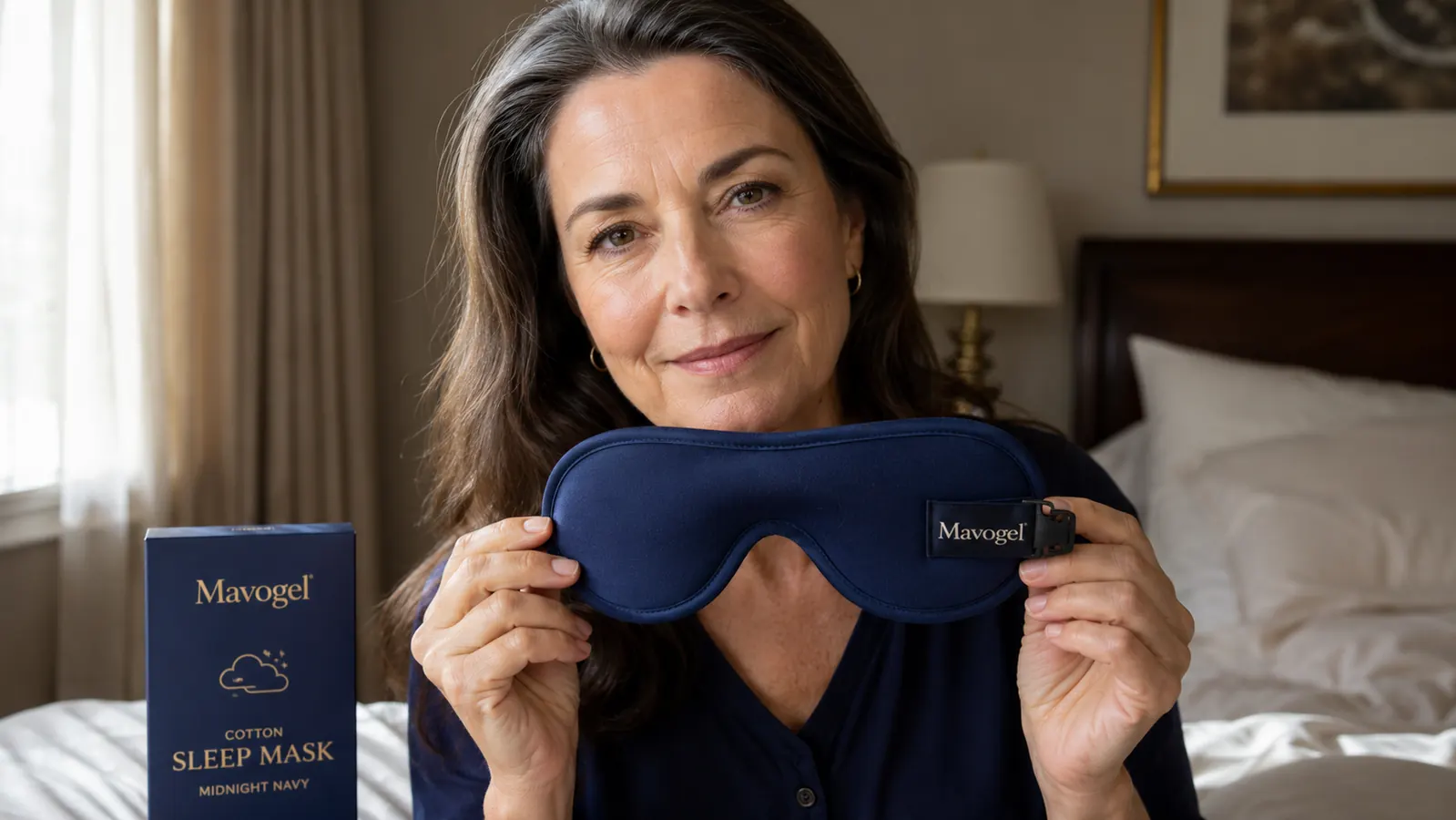
How I Actually Tested This Over Eleven Weeks
I live in a house built in 1987, which means the bedroom curtains were chosen by someone who liked morning light more than sleep. I have never gotten around to replacing them. Most mornings in late spring and summer, my room is noticeably bright by 5:40 a.m. I am not a morning person. My body wants to sleep until 6:45. Before this mask, I was losing over an hour of sleep a night purely because of ambient light, not noise, not temperature, just light.
I wore the Mavogel mask every night for the first four weeks without changing anything else in my sleep routine. I tracked when I woke up naturally by checking my phone before getting out of bed. In week one, I still woke around 5:45 a couple of mornings while I was adjusting to wearing the mask. By week two, I was waking up consistently closer to 6:30 or 6:40. Not because the mask made me sleep longer by magic, but because removing the light trigger let my body actually finish its sleep cycle.
Weeks five through eleven I wore it on a mix of nights, including three nights in a hotel room with a poor blackout curtain gap and two plane rides. On the plane it worked extremely well. On the hotel nights it worked fine, though on the second hotel stay I noticed the elastic felt slightly looser than when I started. Eleven weeks of daily wear on a budget elastic band is not shocking. The mask still functions perfectly, but the elastic is not as snug as day one.
By week two I was waking up consistently around 6:30 instead of 5:45. Not magic, just what happens when you remove the light trigger that was pulling you out of a sleep cycle.
The Light Blocking: Honest Numbers
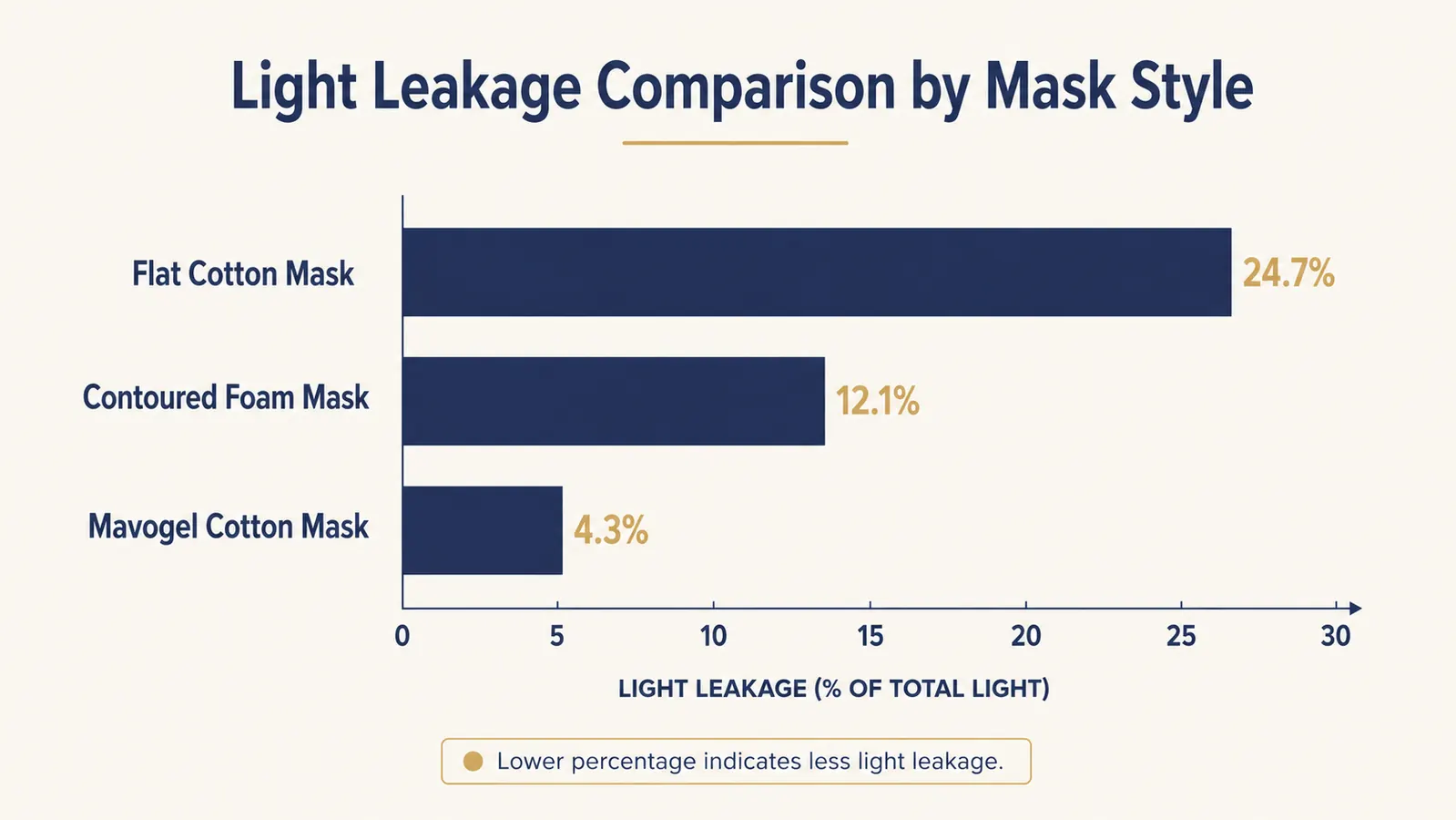
Mavogel calls this mask 'light blocking,' not 'blackout,' and there is a meaningful difference. A blackout mask creates total, zero-light darkness. The Mavogel comes very close, especially once you shape the nose wire. On a scale where 0 is no blocking and 10 is complete blackout, I would put the Mavogel at an 8.5 in my room. There is a sliver of light possible at the very outer corners of the eyes on some face shapes. My face is narrow, so I get nearly total darkness. If you have wider-set eyes or a flatter face shape, you might see a faint glow at the temples.
For comparison, the flat foam mask I used before scored maybe a 6.5 on the same scale because it leaked badly at the nose. Most shaped foam masks with eye cups block better at the corners but press on your eyelids, which I find uncomfortable. The Mavogel sits away from my eyelids entirely, which is rare for a flat cotton design. That is the contoured nose wire doing most of the work.
Comfort for Side Sleepers Specifically
Most sleep mask reviews are written by back sleepers. I sleep on my side, and that changes everything. A mask that feels fine when you are lying on your back can twist, press a seam into your cheek, or lose its seal when your face is buried in a pillow. The Mavogel holds up reasonably well for side sleeping. The cotton fabric is soft enough that I never get a seam mark on my cheek, and because the mask contours rather than cups, there is nothing rigid pressing against my eye socket.
The one side-sleeping caveat is that the mask can shift slightly when I roll over. Not so much that it breaks the seal, but enough that I am aware of the movement. If you are a restless sleeper who rolls several times per night, be aware you may need to reposition it once before morning. For me, it moves maybe two or three millimeters and settles. That is acceptable. A mask I have to remove and re-fit at 3 a.m. would not be.
The cotton fabric itself is a genuine selling point. I have worn masks made of polyester blends that felt slightly warm or created a sweaty film over my eyes on hot nights. The Mavogel cotton breathes. Even in June, when my bedroom is warm before the central air catches up, the mask does not make me feel hotter. That matters more than most people realize when they are comparing sleep masks in a cool online listing.
The Strap: The One Real Design Flaw
I already mentioned the metal clasp pressure point, but I want to go a level deeper on the strap because it is where the mask earns almost all of its negative reviews. The elastic band is single-layer, meaning there is one band going around the back of your head rather than a split Y-shaped strap or a dual-band design. A single band works fine for most people, but it concentrates the pressure at one point on your skull.
If you have had any hair loss at the crown or are particularly sensitive to scalp pressure, pay attention here. The strap tightens via a sliding metal clasp, and if the band runs straight across the middle of your head, you will feel it after a few hours. Move the clasp upward so the band sits higher and wider across the back of your skull. That distributes the contact over a larger area and eliminates the focal pressure.
One thing that surprised me: the elastic does not dig into my hair the way some headband-style sleep accessories do. It sits above the ears cleanly and does not create a deep groove or frizz. That is a function of the elastic being wide and flat rather than round, which most buyers do not think to check before purchasing.
What I Liked
- Contoured nose wire eliminates the nose-gap light leak that ruins flat masks
- Cotton fabric stays cool and breathable even on warm nights
- Sits away from eyelids so you do not feel pressure on your eyes
- Holds its position reasonably well for side sleepers
- Adjustable strap fits a wide range of head sizes, adults and teenagers alike
- Featherweight, packs flat for travel, fits inside any toiletry bag
- Budget-friendly, so the cost of trying it is genuinely low
Where It Falls Short
- Metal clasp can create a pressure point if the band sits at the base of the skull, fixable by repositioning
- Elastic loses some snugness after two to three months of nightly wear
- Does not achieve 100% total blackout for every face shape, especially at the outer corners
- Only one color option available at the standard price point
- Single elastic band is less stable than a split Y-strap for very restless sleepers
Does the Rating Make Sense? A Reality Check on 94,000 Reviews
When a product has over 90,000 reviews, two things can be happening. Either a lot of people genuinely like it, or Amazon's algorithm has rewarded it so heavily that it kept getting shown to people who would buy impulsively and leave a reflexive five-star review. With the Mavogel, I think it is mostly the former. The one-star reviews are real complaints, mostly about the strap or about eye-corner light leakage, and they represent a small but consistent minority. When I filter by one and two stars, I see about 8 to 10 percent of total reviews. For a mass-market item at this price, that is actually a healthy ratio.
The positive reviews tend to come from three groups: people switching from flat foam masks who are amazed by the nose wire, travelers who needed something lightweight and dark for hotel rooms, and people who previously wore expensive contoured foam masks and prefer the softer cotton feel. All three groups are giving honest feedback. What they are not telling you is how the mask performs over multiple months, because most people review a product in the first few weeks of enthusiasm. My eleven-week perspective gives me a little more patience for the product's actual durability curve.
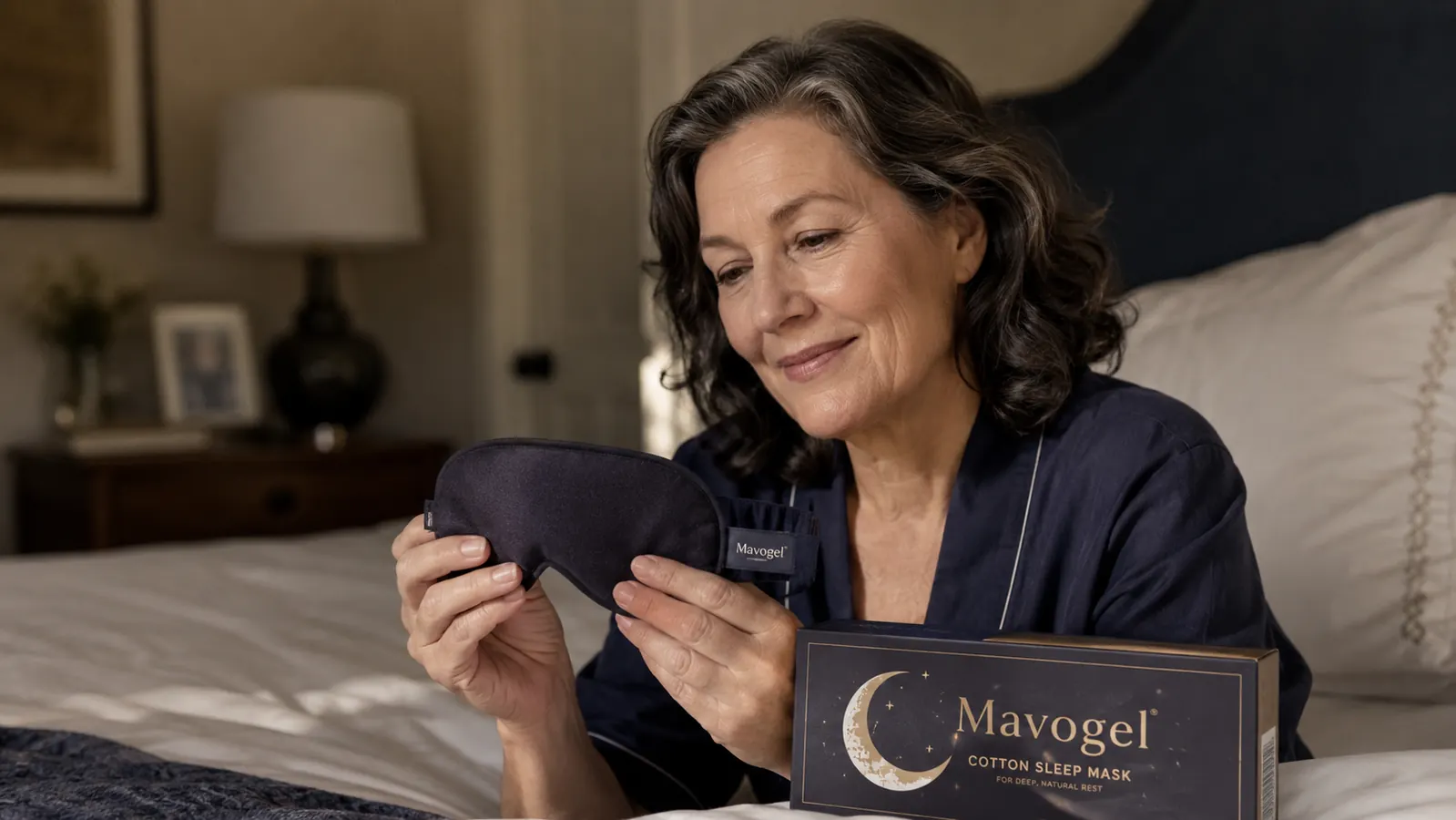
Who This Sleep Mask Is For
The Mavogel Cotton Sleep Mask is a strong match for you if early light is your main sleep disruptor, whether that is sunrise coming through thin curtains, a streetlamp outside your window, or a partner who wakes earlier and turns on a bedside lamp. It is also excellent for travel, specifically plane travel and hotel rooms where you have no control over the light environment. At this price, it makes sense to keep one in your carry-on permanently.
It also works well if you have eyelid sensitivity and have struggled with the foam-cup style masks that press directly on your eyes. Because the Mavogel sits flat and the nose wire creates the light seal at the bottom rather than at the eye rim, there is nothing pushing against your eyelids at all. Several people I know who have abandoned eye-cup masks because of eyelid pressure have found this one comfortable without that trade-off.
Who Should Skip It
If you are a very restless sleeper who rotates dramatically at night and needs a mask that is almost locked in place, you may find the Mavogel shifts too much. A silicone-edged mask or a split-strap design will hold better under aggressive movement. The Mavogel is stable enough for the average person but it is not engineered for people who roll from back to stomach to side repeatedly.
Also skip it if you want a truly maintenance-free product. The nose wire needs to be pinched to fit your face when you first use it, and occasionally re-shaped after washing. It is a ten-second task but it is a task. Some people want to pull a mask out of the packaging and have it work perfectly with zero fuss. This one asks for a small amount of setup.
Finally, if your sleep disruption is primarily noise rather than light, no sleep mask will solve that for you. Pair the Mavogel with the Yogasleep Dohm white noise machine if you are dealing with both problems. The mask handles light, the Dohm handles sound, and together they address the two most common environmental causes of broken sleep without any medication involved.
The Bottom Line: Is the Crowd Right?
Yes, mostly. The Mavogel Cotton Sleep Mask earns its dominant position in the category. The nose wire is a genuine innovation for a flat-style mask. The cotton fabric is more comfortable than most synthetic alternatives at this price. And at budget pricing, it is one of the lowest-risk things you can try if early-morning light is robbing you of sleep.
The crowd just does not tell you about the strap clasp or the months-two-to-three elastic loosening, because most five-star reviews are written before those things surface. Now you know. Adjust the strap, shape the nose wire, and this mask delivers exactly what it promises.
Ready to block out morning light without spending premium prices on a mask you might not like?
The Mavogel Cotton Sleep Mask is budget-friendly, ships with Prime, and returns are painless if it does not work for you. See today's price and current stock on Amazon.
Amazon Check Today's Price on Amazon →