

I have heard the same complaint from readers at least two dozen times: they bought a weighted blanket, it felt wrong, and they shoved it in a closet after a week. When I ask what went wrong, the answer is almost always the same. They picked a weight based on what sounded good, not based on their body. The blanket was either so heavy they felt pinned to the mattress or so light they could barely feel it. Either way, they blamed the blanket instead of the mismatch. The good news is that choosing the right weighted blanket is not complicated once you know the three numbers that matter: your body weight, your sleep position, and the blanket's size relative to your bed.
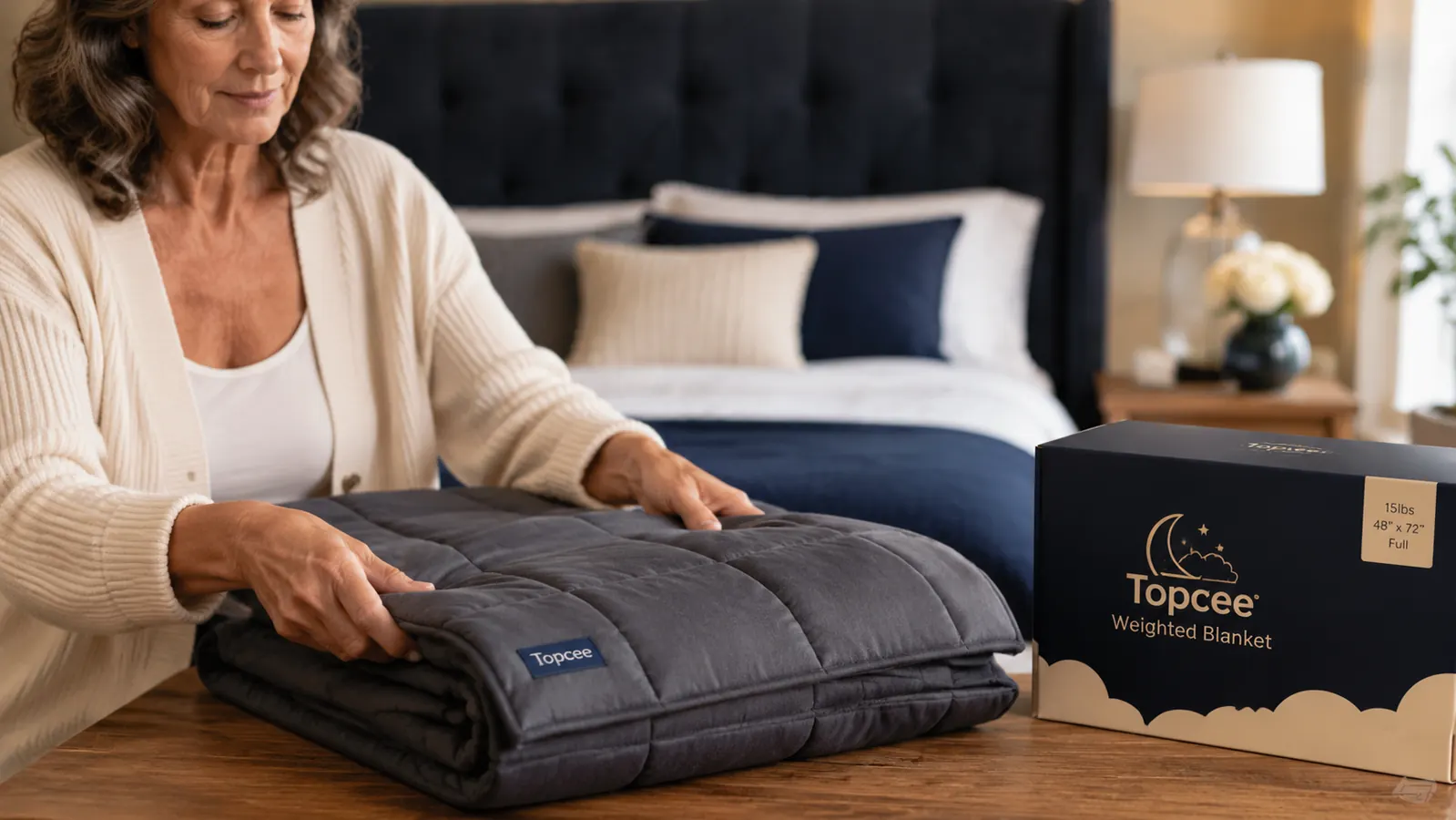
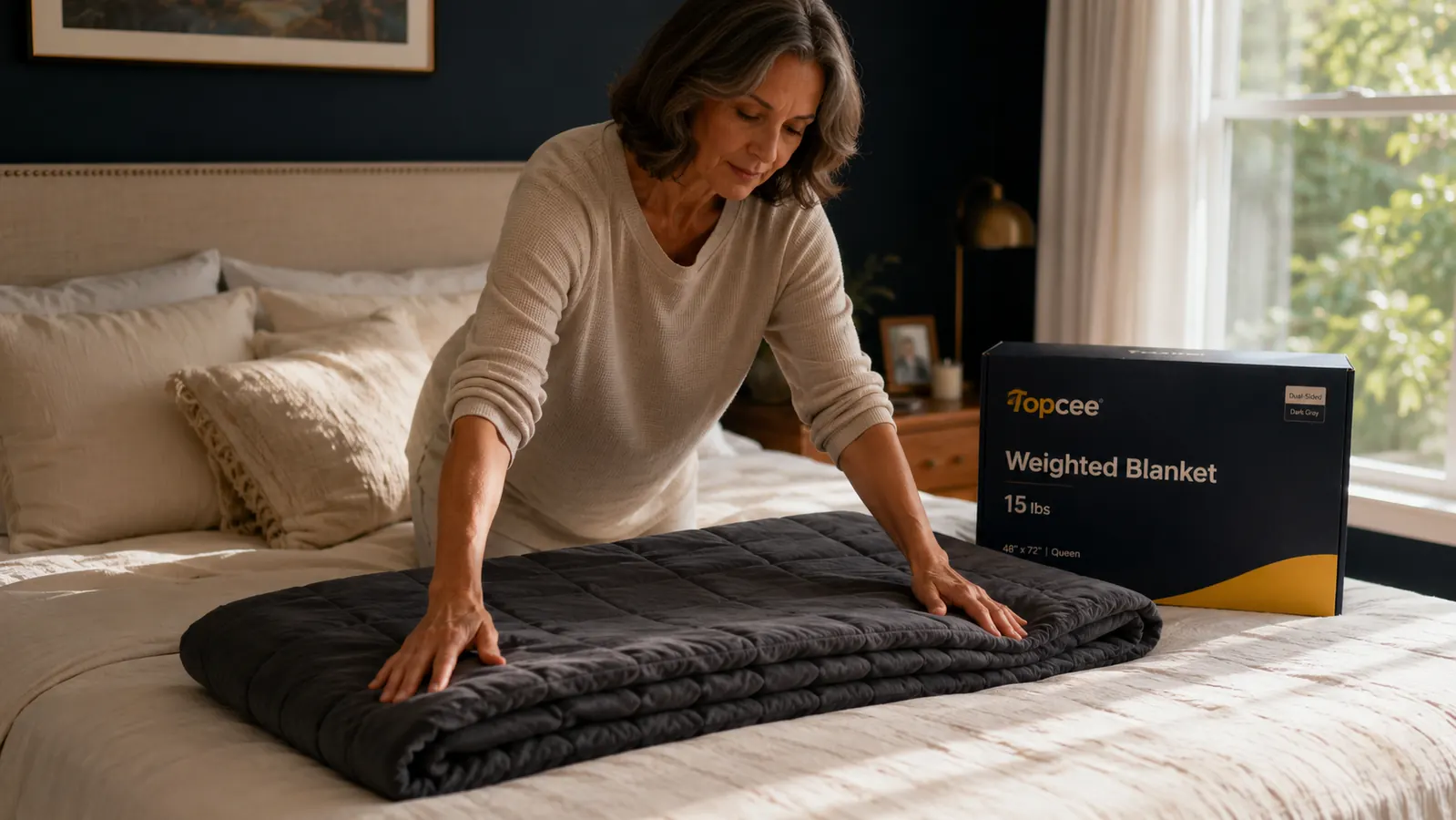
I have been testing sleep accessories for several years now, and the Topcee weighted blanket at 20 pounds in the 60x80 queen size is the one I reach for most often when someone asks me for a starting recommendation in the 150-to-200-pound range. It is not the fanciest blanket on the market, but the weight is distributed evenly, the cooling fabric breathes reasonably well through spring and fall, and the price does not sting if it takes you a couple of nights to adjust. That said, it is not right for everyone, and this guide will help you figure out whether it is right for you, or whether you need to be looking at a different weight entirely.
Already know you're in the 150-200 lb range? The Topcee 20-lb is what I'd hand you right now.
The Topcee 20-pound queen-size weighted blanket has over 10,000 reviews on Amazon and is budget-friendly. It is the most sensible starting point for most adults in that weight range who want to try a weighted blanket without a big financial commitment.
Amazon Check Today's Price on Amazon →Step 1: Use Your Body Weight to Establish a Starting Range
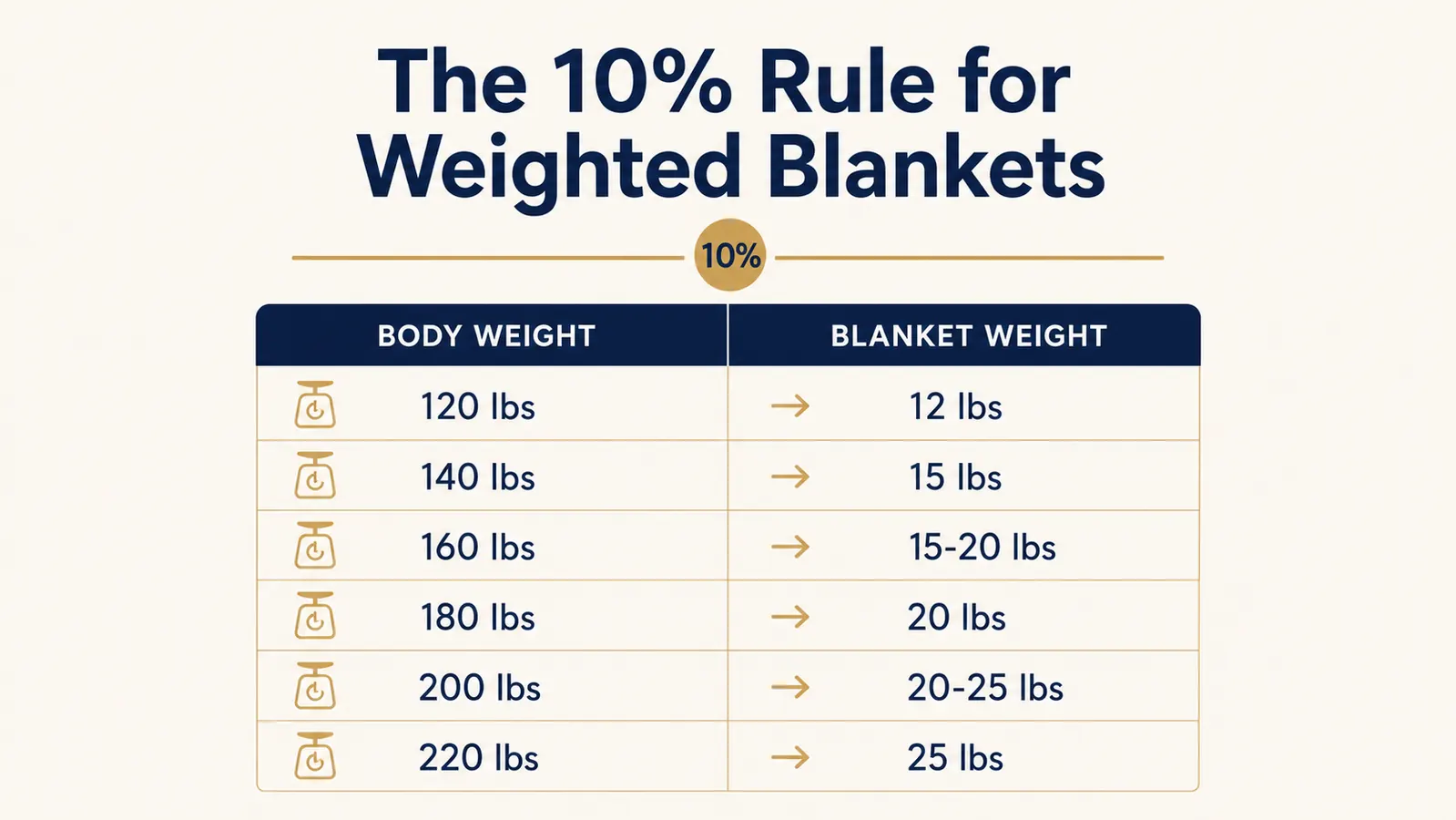
The most widely used rule of thumb in sleep research and occupational therapy is to choose a blanket that weighs approximately 10 percent of your body weight. This comes from the sensory-integration research behind deep-pressure stimulation, which suggests that the calming effect on the nervous system kicks in most reliably at that pressure ratio. A blanket that is too light does not generate enough pressure to trigger the relaxation response. A blanket that is too heavy can actually increase anxiety and restrict breathing, which is the last thing you want when you are trying to fall asleep.
Here is how the math works out across common adult body weights. If you weigh around 120 pounds, start with a 12-pound blanket. At 140 pounds, a 15-pound blanket is your target. Between 150 and 200 pounds, the 20-pound range is where most people land, and it is why the 20-pound size is by far the most popular on Amazon. If you weigh over 220 pounds, look for a 25-pound option rather than trying to make a 20-pound blanket work by doubling up layers. The pressure should feel like a firm, even hug, not like someone sat on you.
One important caveat: older adults and anyone with respiratory concerns, circulation issues, or claustrophobia should start at the lower end of the 10-percent range, or even 7 percent, and move up only if the lighter weight feels insufficient. More pressure is not always better. Start conservative and adjust.
Step 2: Account for Your Sleep Position
Body weight is the foundation, but sleep position matters too, especially if you move around at night. Back sleepers generally tolerate the full 10-percent weight without issue because the blanket distributes evenly across the torso when you are lying flat. Side sleepers often find that the blanket bunches toward the lower half of the body as they curl, concentrating weight on the hip and thigh rather than spreading it across the core. If you sleep primarily on your side, consider dropping a pound or two below the strict 10-percent calculation so the redistributed weight does not feel excessive at 2 a.m.
Stomach sleepers are the outlier group. Weighted blankets are generally not recommended if you sleep on your stomach, because the added pressure on your chest and abdomen can make breathing feel more effortful and may worsen lower-back strain. If you are a committed stomach sleeper, a lighter blanket in the 10-12 pound range is the maximum I would suggest, and even then, you may find that the blanket migrates off you during the night before you feel much benefit.
The pressure should feel like a firm, even hug. Not like someone sat on you. If you feel pinned rather than held, the weight is too high for your body.
Step 3: Match the Blanket Size to Your Bed, Not to a Shared Comforter
This is the step that trips up most couples shopping together. Weighted blankets are almost always designed for single-sleeper use. The standard queen size, which is 60 inches wide by 80 inches long, is sized for one person lying in the center of a queen mattress, not for draping over the edges the way a regular comforter does. If you and your partner both want a weighted blanket, you need two individual blankets, not one king-sized blanket split between you.
Why does this matter? Because the 10-percent rule only works when the blanket is resting on one body. If you are sharing a 20-pound blanket between two people, each person is only receiving the pressure of 10 pounds, which is likely below the threshold for effective deep-pressure stimulation for either of you. Buy one each, use your individual body-weight calculation for each blanket, and both sleepers get the correct pressure. I know that sounds like a more expensive solution, but a budget Topcee per person is still less than most couples spend on a single midrange comforter.
Step 4: Choose the Right Fill Material for Your Temperature
Weighted blankets get their weight from fill material sewn into internal pockets. The two most common fills are glass beads and plastic poly pellets. Glass beads are smaller, denser, and distribute more evenly in tighter pocket grids, which means fewer lumpy spots and a smoother feel against your body. Plastic pellets are larger and can shift more noticeably, and older blankets with plastic pellets sometimes develop a rustling sound when you move. For most adults buying a blanket today, glass beads are the better default choice, and the Topcee uses glass beads sewn into 4-inch quilted squares.
The outer fabric layer matters just as much as the fill if you run warm at night. Cotton and bamboo covers breathe better and wick moisture more effectively than polyester. Some blankets come with removable duvet covers so you can swap a cooling cotton cover in summer and a warmer minky cover in winter. If you tend to overheat, prioritize a blanket with a breathable outer shell rather than chasing a specific fill. The Topcee's cooling fabric does a reasonable job in shoulder seasons, but I would not call it a true hot-sleeper solution in peak summer without supplementing with a cooling mattress pad or a fan.
Step 5: Give the Adjustment Period a Real Chance Before Deciding
Most adults need five to seven nights to adjust to sleeping under a weighted blanket, and some people need two full weeks. The first night or two often feel a little strange, not necessarily uncomfortable, just different. The weight feels more present than you expected. You may wake up once or twice to reposition the blanket. This is normal, and it does not mean the blanket is wrong for you. It means your body is learning to stop fighting the pressure and settle into it.
The adjustment period is also when you collect information. If after three nights the blanket still feels like it is pressing down on your chest and your heart rate feels elevated when you lie down, the weight is likely too high. Drop to a lighter option. If after a week the blanket feels completely unnoticeable, like you could take it off without caring, the weight is probably too low. The sweet spot is a feeling most people describe as grounded, like the blanket is holding you in place without fighting your movements.
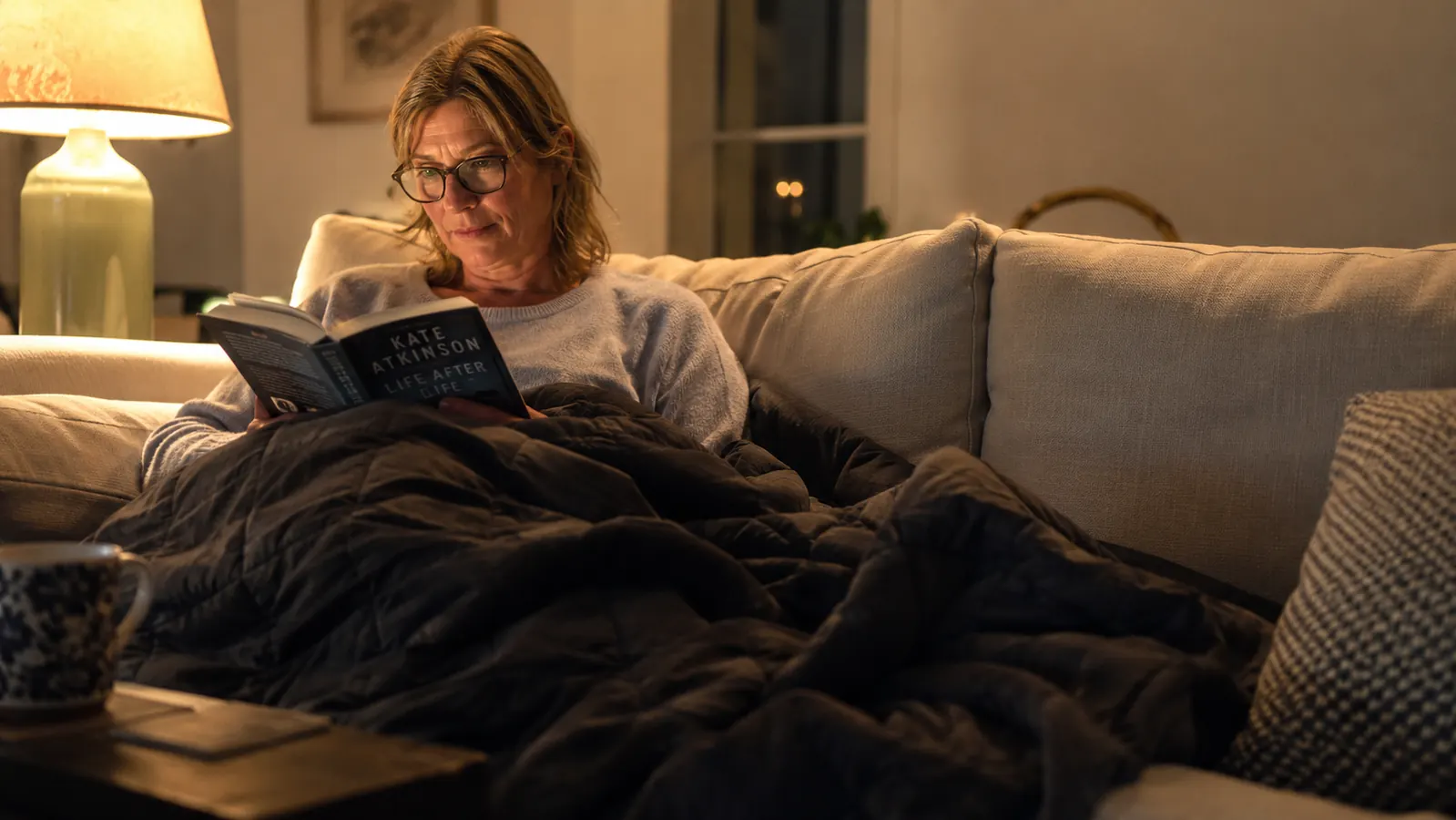
One practical tip for the adjustment period: start by using the blanket on the couch for an hour in the evening before you commit to it all night. Thirty to sixty minutes of reading or watching television under the blanket gives your nervous system a low-stakes introduction to the pressure. Many people find that by the time they go to bed, they are actually looking forward to getting back under it.
What Else Helps
A weighted blanket works best as part of a consistent sleep environment rather than as a standalone fix. A few things that pair well with it: keeping your bedroom cool (between 65 and 68 degrees Fahrenheit is the range most sleep researchers point to), minimizing light, and having a predictable wind-down routine in the 45 minutes before bed. If you are also dealing with noise disruption from a partner, traffic, or a light-sleeping household, a white noise machine running at a steady volume addresses a layer the blanket cannot. If hip or lower-back pain is part of why you are not sleeping well, a knee support pillow for your side-sleeping position can work alongside the weighted blanket. The blanket handles the pressure and grounding; the knee pillow handles the spinal alignment. Together they cover most of what wakes a light sleeper up mid-night.
On the supplement side, some readers ask whether magnesium glycinate pairs well with a weighted blanket routine. The short answer is yes. Magnesium glycinate taken about an hour before bed supports muscle relaxation and helps quiet the nervous system in a way that complements the calming pressure of a weighted blanket. Neither one replaces the other, but if you are already doing the blanket and still struggling to fall asleep, magnesium glycinate is the next thing I would add before reaching for anything stronger.
You can read more about the Topcee blanket in the full three-month review at the link below, and if you are still deciding between the Topcee and a premium option like the Gravity blanket, the head-to-head comparison covers the fill quality, washability, and price difference in detail. The 10-reasons listicle is worth a quick read if you want the research-side picture on how deep-pressure stimulation affects sleep quality before you commit.
If the 10% rule puts you in the 20-lb range, the Topcee is the most sensible place to start.
At a budget-friendly price point and with more than 10,000 verified Amazon reviews, the Topcee 20-pound queen-size weighted blanket is one of the best-value entries into weighted sleep. Glass-bead fill, cooling fabric, and a straightforward return window if the weight turns out to be wrong for you.
Amazon Check Today's Price on Amazon →